Huarcay
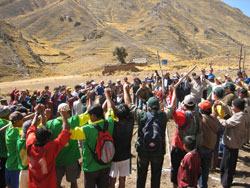
Huarcay is a remote village of 150 people in the Andes located two hours from Cusco, Peru. Until recently, no paved road led to Huarcay, making it a "forgotten community" without electricity, running water or even a school for the children. Hands Across the Americas adopted this community and made a commitment to provide anIntegrated Health program to help the people of Huarcay.
What is Integrated Health?
Integrated Health is a comprehensive program that encompasses the three fundamental needs for families: education, healthcare and nutrition.
We believe that:
What is Integrated Health?
Integrated Health is a comprehensive program that encompasses the three fundamental needs for families: education, healthcare and nutrition.
We believe that:
- Without an education, children will continue to live in poverty and will not have a chance for a fulfilling future.
- Without healthcare, people are at risk for contracting multiple illnesses, making adults unable to work and children unable to sustain normal growth.
- Without proper nutrition, children's physical and academic development is compromised and adults lack the strength to adequately support their families.
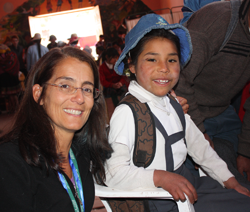
Hands Across the Americas is committed to reversing the trend of generations living in poverty. Our hope is that we can provide opportunities for change and interrupt the cycle of poverty for families, one person at a time.
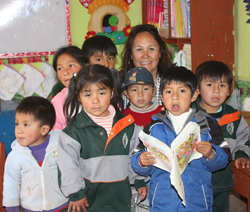
EDUCATION: The children of Huarcay used to walk more than three hours to get to the closest school and therefore many did not make the journey. Hands Across the Americas built a school for children which includes a library, a music room, an art center, computers and a recreational area.
HEALTHCARE: Once a year, Hands Across the Americas takes a team of medical volunteers to remote areas like Huarcay to provide free medical care. Our medical care includes a program to de-worm the children and their families and provide them with safe drinking water to prevent illness and death from contaminated water. Our organization has an agreement with local health partners that requires them to visit the villages once a month to provide follow-up medical care after the U.S. medical team departs.
The Huarcay Project: Paving the Road to the FutureNUTRITION: The majority of people living in poverty suffer from severe malnutrition lacking the nutrients gained from eating protein and fresh fruits and vegetables. In partnership with local professionals and community leaders in Huarcay, Hands Across the Americas is building a greenhouse for growing vegetables and a fish farm for producing fish year-round. These projects will provide families with well balanced meals, allowing children to grow and have the proper nutrition so they can do well in school, and adults to be healthy so that they can work productively.
The fish farm will provide protein for the people of Huarcay, and also produce a sufficient supply of fish to be sold to neighboring villages, generating a source of income for the community. In addition, Hands Across the Americas funds professionals to teach the community how to farm the fish, plant fruits and harvest vegetables so that they can become self-sufficient.
EDUCATION: The children of Huarcay used to walk more than three hours to get to the closest school and therefore many did not make the journey. Hands Across the Americas built a school for children which includes a library, a music room, an art center, computers and a recreational area.
HEALTHCARE: Once a year, Hands Across the Americas takes a team of medical volunteers to remote areas like Huarcay to provide free medical care. Our medical care includes a program to de-worm the children and their families and provide them with safe drinking water to prevent illness and death from contaminated water. Our organization has an agreement with local health partners that requires them to visit the villages once a month to provide follow-up medical care after the U.S. medical team departs.
The Huarcay Project: Paving the Road to the FutureNUTRITION: The majority of people living in poverty suffer from severe malnutrition lacking the nutrients gained from eating protein and fresh fruits and vegetables. In partnership with local professionals and community leaders in Huarcay, Hands Across the Americas is building a greenhouse for growing vegetables and a fish farm for producing fish year-round. These projects will provide families with well balanced meals, allowing children to grow and have the proper nutrition so they can do well in school, and adults to be healthy so that they can work productively.
The fish farm will provide protein for the people of Huarcay, and also produce a sufficient supply of fish to be sold to neighboring villages, generating a source of income for the community. In addition, Hands Across the Americas funds professionals to teach the community how to farm the fish, plant fruits and harvest vegetables so that they can become self-sufficient.